

EssayMage vs. Traditional Detectors: Which is Better at Catching AI-Generated Text?
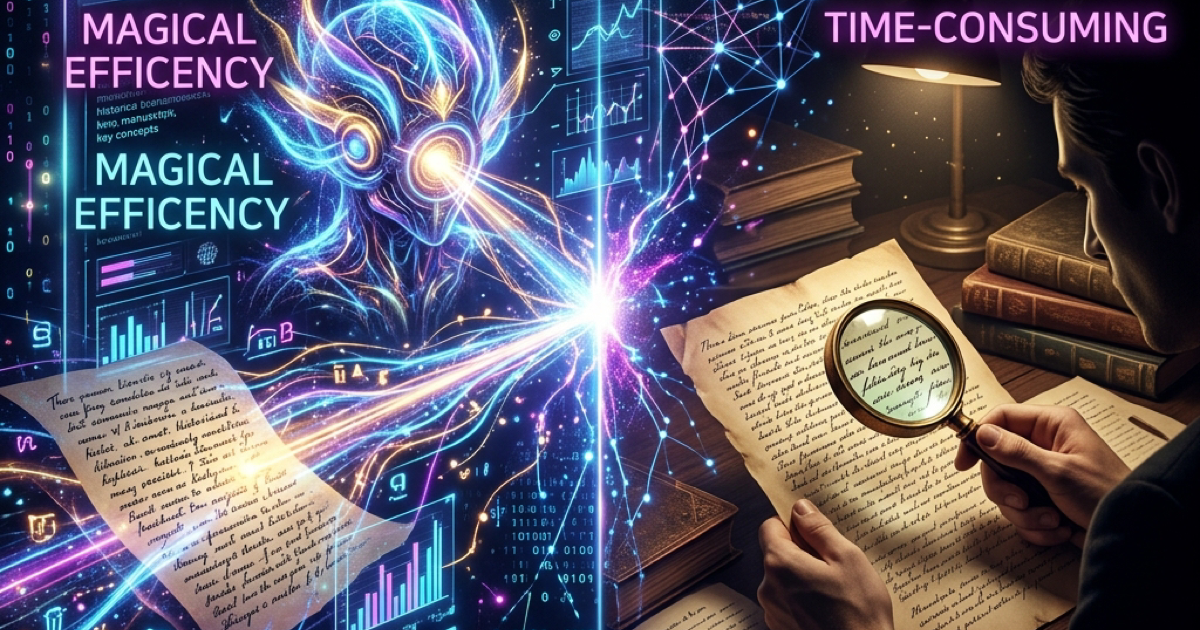
EssayMage vs. Traditional Detectors: Which is Better at Catching AI-Generated Text?
In the rapidly evolving landscape of academic writing, the rise of AI writing tools like ChatGPT, Claude, and Gemini has fundamentally changed how students approach essays and research papers. Consequently, universities and educators have engaged in an ongoing arms race to deploy robust detection software. However, the critical question arises: are the traditional plagiarism tools we've relied on for decades still effective, or is it time to switch to specialized AI text detectors?
Today, we will take an in-depth dive comparing traditional legacy detectors with modern, AI-first platforms like EssayMage. We will examine their methodologies, test their accuracy, and explore why an increasing number of students and institutions are rethinking how they analyze academic texts.
The Core Difference in Methodology
To understand why one system might perform better than another, we must look at how they actually analyze documents.
How Traditional Plagiarism Detectors Work
Legacy tools—the kind most universities integrated in the early 2010s—rely heavily on string matching and database comparison.
- They crawl billions of web pages, journals, and previously submitted academic papers.
- When you scan a document, the software checks to see if any sequence of words directly matches a known source.
- If a match is found, they flag the text as potentially plagiarized and provide a link to the original source.
While this approach is incredibly effective at catching "copy-paste" plagiarism, it faces a monumental hurdle when dealing with generative AI. AI content is inherently original. Because models like ChatGPT generate unique text word-by-word based on probability, there is no "source text" to match against.
How EssayMage's Originality Scanner Works
In contrast, EssayMage’s Originality Scanner is built from the ground up to identify patterns rather than exact matches. Instead of looking for copy-pasted strings, our system analyzes:
- Burstiness: Human writers tend to vary their sentence lengths dramatically—mixing long, complex thoughts with short, punchy statements. AI, on the other hand, typically relies on predictable sentence lengths with minimal variance.
- Perplexity: This measures how "surprised" a language model is by a sequence of words. If the phrasing is highly predictable, it is more likely to have been generated by a machine.
- Semantic Fingerprinting: Modern AI models have specific stylistic quirks (like overusing words such as "delve," "crucial," or "tapestry"). EssayMage’s algorithms are continuously updated to spot the latest fingerprints of models from OpenAI, Anthropic, and Google.
The Accuracy Test: Catching Advanced Prompts
We ran a controlled test comparing a leading traditional college detector against EssayMage, using three distinct types of texts:
Test 1: Direct Copy-Paste Human Text
The prompt: We copy-pasted a paragraph directly from a published 1998 academic journal.
- Traditional Detector Result: 100% Plagiarized. Successfully identified the source.
- EssayMage Result: 100% Match found. Successfully flagged the legacy plagiarism.
Winner: Tie. Both systems confidently identified exact-match plagiarism.
Test 2: Standard ChatGPT Essay
The prompt: Generated a 500-word essay about the causes of World War I using a standard ChatGPT prompt.
- Traditional Detector Result: 0% Plagiarized. (Because the text was unique, the string-matching failed entirely).
- EssayMage Result: 98% AI-Generated. Detected the hallmark perplexity and burstiness patterns of GPT-4o.
Winner: EssayMage. Traditional detectors are completely blind to standard generated text unless they have specifically licensed third-party AI detection models (which many basic versions still do not).
Test 3: Heavily Paraphrased AI Text
The prompt: We took the ChatGPT essay from Test 2, ran it through a "humanizer" tool, and injected deliberate manual edits to disrupt the formatting.
- Traditional Detector Result: 0% Plagiarized.
- EssayMage Result: 74% AI-Generated.
Winner: EssayMage. While "humanizers" attempt to manipulate burstiness, EssayMage's deep semantic mapping was able to trace the underlying structure back to machine logic, flagging the majority of the document successfully.
Why False Positives Matter (and How We Prevent Them)
One of the most dangerous side effects of the AI detection craze is the false positive—when a student’s legitimate hard work is incorrectly flagged as AI-generated by a flawed detector. Traditional platforms that rapidly rushed AI detection tools into the market faced heavy backlash in 2024 and 2025 as students were unfairly accused of cheating due to inaccurate software.
Because EssayMage was built intentionally as an AI-first tool, rather than an "add-on" to a legacy database, our false positive rate is significantly lower. We achieve this by:
- Requiring higher confidence thresholds before labeling an entire document as AI.
- Providing granular sentence-by-sentence highlights so you can see exactly which phrases triggered the scanner, rather than just issuing a blunt percentage score.
- Encouraging the use of our Academic Proofreader to refine academic tone naturally, proving that polished English does not equate to AI-use.
Privacy and Data Security
A major concern for students using university-mandated detectors is the automatic repository. When you submit a paper to traditional institutional software, your work is permanently added to their database to check against future students' work.
EssayMage takes a strictly user-centric privacy approach. When you use the Originality Scanner, your document is temporarily processed in memory and never added to a global repository. This is especially critical for students who want to check their essays before submitting them to their professor, ensuring they don't accidentally self-plagiarize against their own pre-check.
Verdict: Which Should You Use?
If you are a student or a freelance writer looking to ensure your work is original, relying solely on a traditional string-matching plagiarism checker is no longer sufficient. It will tell you if you forgot a citation, but it will leave you completely vulnerable to accidental AI detection flags from your professor’s software.
Choose Legacy Checkers If:
- You only care about checking for uncited quotes from Wikipedia or published journals.
- You are not concerned about AI detection metrics.
Choose EssayMage If:
- You need to know exactly how much of your text looks like it was written by ChatGPT.
- You want the deepest, most accurate pattern recognition available.
- You value your privacy and don't want your intellectual property permanently stored in a corporate database.
To see the difference for yourself, try the EssayMage Originality Scanner today and ensure your academic integrity is foolproof.