

The Future of AI in Higher Education: Transformative Potential and Ethical Challenges
The Future of AI in Higher Education: Transformative Potential and Ethical Challenges
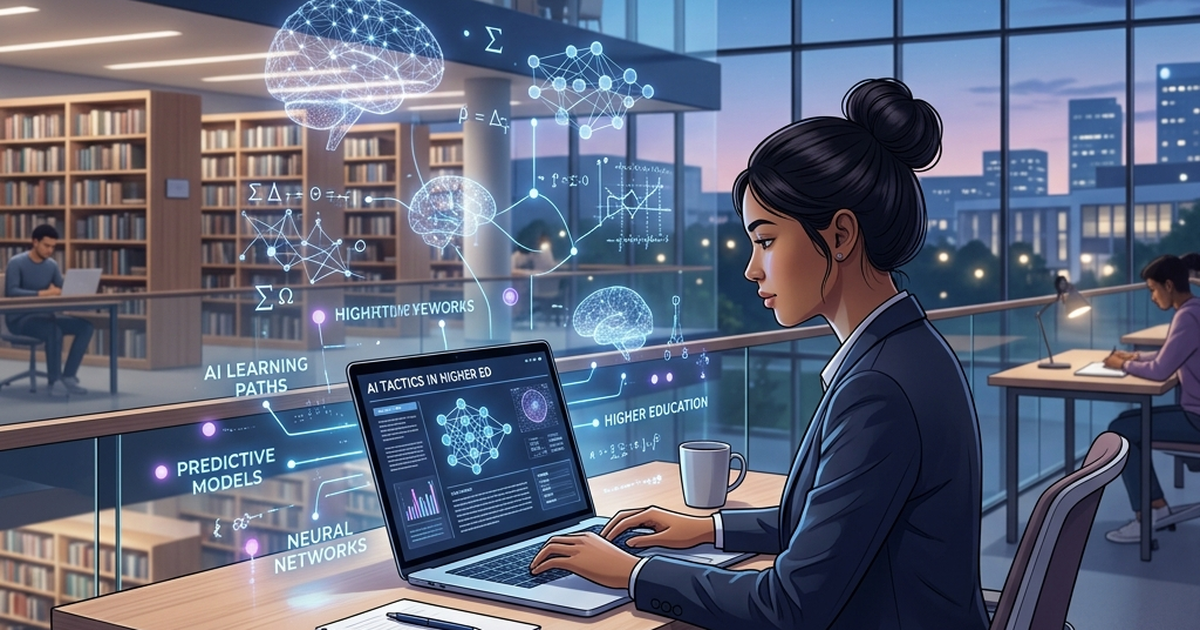
The integration of Artificial Intelligence (AI) into higher education is no longer a futuristic concept; it is a present-day reality that is fundamentally shifting how students learn, how professors teach, and how institutions operate. From generative AI tools that assist in drafting essays to predictive analytics that identify students at risk of dropping out, AI is weaving itself into the very fabric of the university experience.
However, this rapid evolution brings with it a complex set of ethical considerations and structural challenges. While AI offers unprecedented opportunities for personalized and accessible education, it also raises questions about academic integrity, the value of traditional degrees, and the digital divide. In this guide, we will explore the dual nature of AI in academia and how stakeholders can navigate this transformative era.
The Promise of Personalized Learning
One of the most significant benefits of AI in higher education is its ability to personalize the learning experience at scale. In a traditional lecture hall, a professor often teaches to the "middle," leaving advanced students bored and struggling students behind. AI-driven platforms can change this.
Adaptive Learning Pathways
AI algorithms can analyze a student's performance in real-time, identifying areas where they excel and where they struggle. By adjusting the difficulty and type of content based on individual needs, AI allows students to master concepts at their own pace. This "adaptive learning" ensures that the foundation is solid before moving on to more complex material.
24/7 Academic Support
AI chatbots and virtual assistants are becoming common features on university websites and learning management systems. These tools provide instant support for administrative questions, technical issues, and even basic academic tutoring. This accessibility is particularly beneficial for students in different time zones or those with unconventional schedules.
Redefining Academic Integrity
The rise of Large Language Models (LLMs) like ChatGPT has triggered a heated debate about academic honesty. When an AI can generate a passing essay in seconds, the traditional model of assessment—the take-home paper—is under threat.
The Challenge of AI-Generated Content
Universities are currently grappling with how to define "original work" in the age of AI. Is using AI for brainstorming acceptable? What about using it to polish grammar or structure? The lines are blurry, and policies vary widely between institutions.
To maintain transparency, many students are now turning to tools like our Originality Scanner to ensure their work remains within the bounds of academic integrity. By checking for AI-generated patterns and potential plagiarism, students can submit their work with confidence.
Moving Toward "AI Literacy"
Rather than banning AI outright—which many argue is impossible and counterproductive—some institutions are incorporating AI literacy into their curricula. The goal is to teach students how to use AI responsibly and critically, understanding its limitations, biases, and the importance of human oversight.
The Evolution of the Writing Process
Writing is at the heart of the academic experience, and AI is changing how we approach it. Far from replacing the writer, AI tools are acting as sophisticated research and editing partners.
Strengthening Structure and Tone
Academic writing requires a specific level of formality and rigor. Students, especially those writing in their non-native language, often struggle with the nuanced tone required for a thesis or dissertation. Tools like the Tone Refiner allow writers to maintain their original ideas while ensuring the delivery is professional and academically sound.
Precision in Proofreading
Beyond simple spell-check, AI-powered systems can now identify structural weaknesses, repetitive phrasing, and complex grammatical errors. Using an Academic Proofreader has become a standard step for researchers looking to polish their papers before submission to peer-reviewed journals.
Ethical Concerns and the Digital Divide
Despite the benefits, the AI revolution in education is not without its pitfalls. Ethical concerns must remain at the forefront of the conversation.
- Bias and Fairness: AI models are trained on historical data, which can contain inherent biases. If these biases are not addressed, AI tools could inadvertently disadvantage certain groups of students.
- Data Privacy: The use of AI requires the collection of vast amounts of student data. Protecting this information and ensuring it is used ethically is a major responsibility for universities.
- The Digital Divide: Students with access to the latest AI tools and the high-speed internet required to run them may have a significant advantage over those without. Ensuring equitable access is crucial for the future of higher education.
Preparing for an AI-Integrated Future
As we look toward 2030 and beyond, the role of AI in higher education will only expand. Success in this new landscape will require flexibility and a commitment to lifelong learning.
For students, this means developing a "human-plus-AI" workflow. Use AI to brainstorm, organize, and refine, but never let it replace your critical thinking or your unique voice. For educators, it means shifting focus from the product of learning (the final essay) to the process of learning (how the student arrived at their conclusions).
Conclusion
The future of AI in higher education is not a foregone conclusion; it is a work in progress. By embracing the transformative potential of these tools while remaining vigilant about the ethical challenges, we can create a more personalized, accessible, and rigorous academic environment. Whether you are using an Originality Scanner to verify your work or a Tone Refiner to polish your prose, the key is to use AI as a bridge to better human scholarship, not a replacement for it.