

How to Use AI Writing Tools Responsibly in Academia
How to Use AI Writing Tools Responsibly in Academia
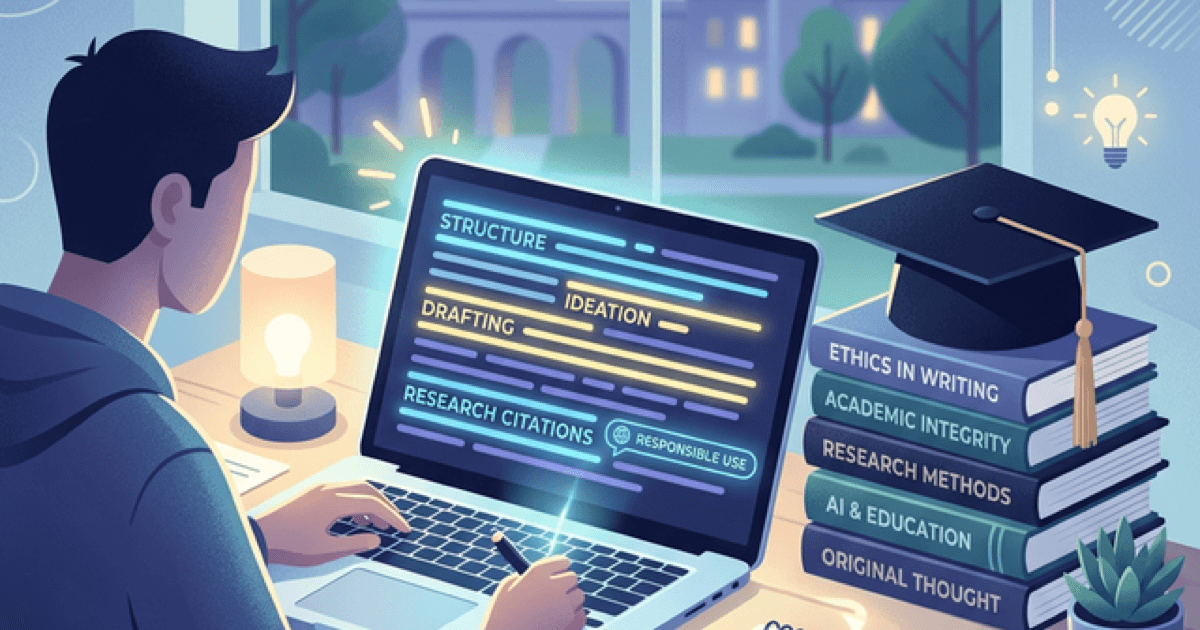
Artificial intelligence writing tools have transformed how students and researchers approach academic writing. From grammar checkers to AI-powered paraphrasers, these tools offer incredible potential — but they also raise important ethical questions. In this guide, we'll explore how to use AI writing tools responsibly while maintaining your academic integrity.
The Rise of AI in Academic Writing
In 2026, AI writing tools are no longer a novelty — they're a reality in every classroom and research lab. Universities worldwide are updating their policies to address AI usage, and students need to understand where the boundaries lie.
The key question isn't whether you should use AI tools, but how you should use them. There's a significant difference between using AI to replace your thinking and using it to enhance your writing process.
✅ Responsible Uses of AI Tools
1. Grammar and Proofreading
Using AI to catch grammatical errors, typos, and awkward sentence structures is widely accepted in academia. This is similar to using a spell checker — it helps polish your work without altering your ideas.
Tip: Tools like our Academic Proofreader can check for grammar, punctuation, and style issues while preserving your original voice and arguments.
2. Tone and Style Refinement
Non-native English speakers often struggle with academic tone. Using AI to adjust the formality or clarity of your writing — while keeping your original ideas — is generally considered acceptable.
Tip: Our Tone Refiner offers multiple modes (Humanize, Academize, Simplify, Professional) to help you find the right voice for your audience.
3. Brainstorming and Outlining
Using AI to generate topic ideas, create outlines, or explore different angles for your argument is a productive use of the technology. The key is that the final writing and analysis must be yours.
4. Citation and Formatting Assistance
AI tools that help format citations in APA, MLA, or Chicago style save time on tedious tasks and reduce formatting errors.
❌ Irresponsible Uses to Avoid
1. Submitting AI-Generated Text as Your Own
This is the clearest violation of academic integrity. If AI wrote the text and you submit it as your own work, that's a form of plagiarism — regardless of whether it passes a traditional plagiarism checker.
2. Paraphrasing Sources Without Attribution
Using AI to rephrase another author's ideas doesn't remove the need to cite them. The underlying ideas still belong to the original author, and proper attribution is always required.
3. Fabricating Data or References
Some AI tools can generate plausible-sounding but completely fictional citations. Always verify that every reference you cite actually exists and says what you claim it says.
How to Protect Yourself
Run an Originality Check
Before submitting any paper, run it through an originality scanner. This helps you catch unintentional similarities with existing sources and ensures your work meets your institution's standards.
Tip: Our Originality Scanner checks for both similarity with existing sources and AI-generated content detection, giving you a comprehensive report before submission.
Understand Your Institution's Policy
Every university has different rules about AI usage. Some allow AI proofreading but prohibit AI-generated content. Others require you to disclose any AI tools you used. Make sure you know your institution's specific guidelines.
Keep Your Drafts
Maintain a record of your writing process — notes, outlines, drafts, and revisions. If questioned about your work's authenticity, having a clear revision history demonstrates that the ideas and writing are genuinely yours.
Disclose AI Usage When Required
Many institutions now require students to declare when and how they used AI tools. Being transparent about your process is always the safest approach.
The Bottom Line
AI writing tools are powerful allies when used correctly. They can help you write more clearly, catch errors you might miss, and save time on formatting. But they should never replace your critical thinking, original analysis, or academic voice.
The goal of academic writing isn't just to produce a polished document — it's to develop your ability to think, argue, and communicate. Use AI as a tool to strengthen these skills, not bypass them.
Write with integrity. Write with confidence. Let AI help you be the best writer you can be.