

주석이 있는 참고문헌 작성법: 학생 가이드
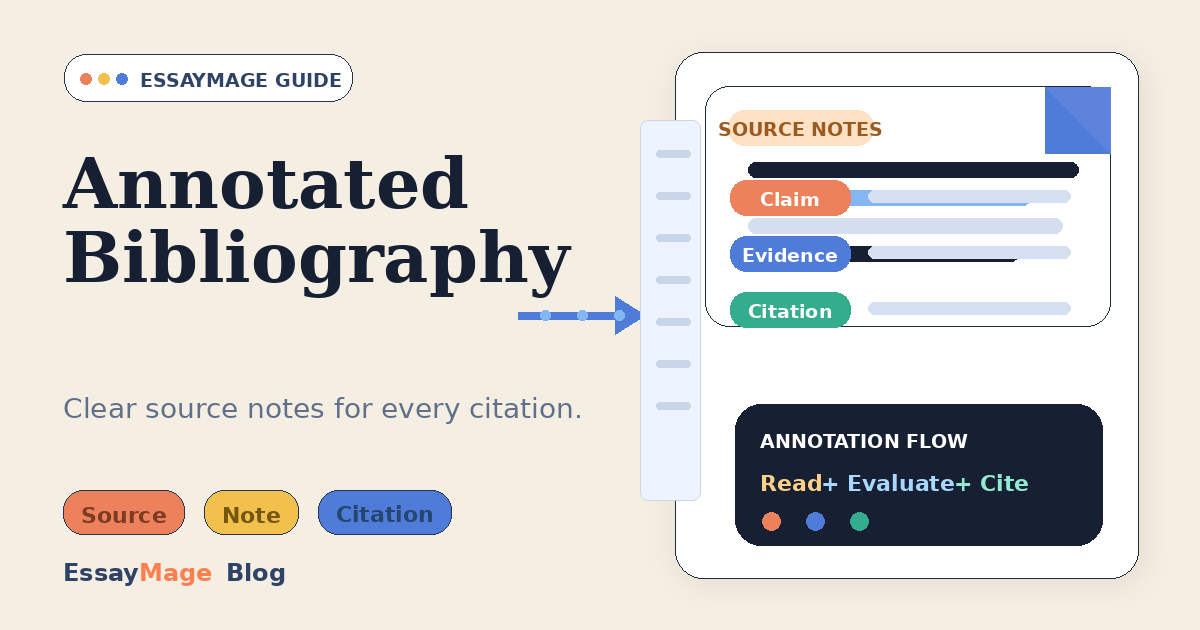
주석이 있는 참고문헌 작성법: 학생 가이드
주석 참고문헌은 단순한 자료 목록이 아닙니다. 각 항목은 자료의 주장, 신뢰도, 연구에 기여하는 방식을 설명합니다. 이 글은 데이터베이스 검색 결과를 유용한 연구 노트로 바꾸는 실용적 절차와 함께 인용 형식, 학술적 어조, 독창성을 관리하는 방법을 안내합니다.
제출 전 EssayMage의 Academic Proofreader로 문장을 다듬고, Tone Refiner로 어조를 조정하며, Originality Scanner로 독창성을 확인할 수 있습니다.
이 능력이 중요한 이유
Academic assignments reward decisions that are visible to the reader. When your research notes, paragraph structure, and final wording are deliberate, your work feels more credible and easier to assess. The goal is not to sound complicated; the goal is to make the logic of your thinking easy to follow from the first sentence to the final line.
This topic also protects you from last-minute revision problems. Students often lose time because they collect too many sources, repeat the introduction in the conclusion, or paste paraphrases that are too close to the original. A clear method reduces those risks and gives you a repeatable process for future papers.
단계별 방법
1. Understand the purpose before you collect sources
Start with the purpose of the assignment and write one sentence that names the job this part of the paper must do. Then compare that sentence with your draft. If the draft contains extra background, unsupported claims, or language that does not move the argument forward, revise before adding more material. This small pause keeps the section focused and prevents accidental repetition.
Use evidence carefully. Introduce the source or point, explain why it matters, and connect it back to the question your paper is answering. If a sentence could appear in any essay on the topic, make it more specific by naming the concept, method, example, or consequence that belongs to your assignment.
2. Choose sources with a clear screening checklist
Start with the purpose of the assignment and write one sentence that names the job this part of the paper must do. Then compare that sentence with your draft. If the draft contains extra background, unsupported claims, or language that does not move the argument forward, revise before adding more material. This small pause keeps the section focused and prevents accidental repetition.
Use evidence carefully. Introduce the source or point, explain why it matters, and connect it back to the question your paper is answering. If a sentence could appear in any essay on the topic, make it more specific by naming the concept, method, example, or consequence that belongs to your assignment.
3. Write the summary before the evaluation
Start with the purpose of the assignment and write one sentence that names the job this part of the paper must do. Then compare that sentence with your draft. If the draft contains extra background, unsupported claims, or language that does not move the argument forward, revise before adding more material. This small pause keeps the section focused and prevents accidental repetition.
Use evidence carefully. Introduce the source or point, explain why it matters, and connect it back to the question your paper is answering. If a sentence could appear in any essay on the topic, make it more specific by naming the concept, method, example, or consequence that belongs to your assignment.
4. Evaluate credibility, relevance, and limits
Start with the purpose of the assignment and write one sentence that names the job this part of the paper must do. Then compare that sentence with your draft. If the draft contains extra background, unsupported claims, or language that does not move the argument forward, revise before adding more material. This small pause keeps the section focused and prevents accidental repetition.
Use evidence carefully. Introduce the source or point, explain why it matters, and connect it back to the question your paper is answering. If a sentence could appear in any essay on the topic, make it more specific by naming the concept, method, example, or consequence that belongs to your assignment.
5. Connect each annotation to your own argument
Start with the purpose of the assignment and write one sentence that names the job this part of the paper must do. Then compare that sentence with your draft. If the draft contains extra background, unsupported claims, or language that does not move the argument forward, revise before adding more material. This small pause keeps the section focused and prevents accidental repetition.
Use evidence carefully. Introduce the source or point, explain why it matters, and connect it back to the question your paper is answering. If a sentence could appear in any essay on the topic, make it more specific by naming the concept, method, example, or consequence that belongs to your assignment.
6. Revise for concise academic tone
Start with the purpose of the assignment and write one sentence that names the job this part of the paper must do. Then compare that sentence with your draft. If the draft contains extra background, unsupported claims, or language that does not move the argument forward, revise before adding more material. This small pause keeps the section focused and prevents accidental repetition.
Use evidence carefully. Introduce the source or point, explain why it matters, and connect it back to the question your paper is answering. If a sentence could appear in any essay on the topic, make it more specific by naming the concept, method, example, or consequence that belongs to your assignment.
7. Check citations, paraphrases, and final consistency
Start with the purpose of the assignment and write one sentence that names the job this part of the paper must do. Then compare that sentence with your draft. If the draft contains extra background, unsupported claims, or language that does not move the argument forward, revise before adding more material. This small pause keeps the section focused and prevents accidental repetition.
Use evidence carefully. Introduce the source or point, explain why it matters, and connect it back to the question your paper is answering. If a sentence could appear in any essay on the topic, make it more specific by naming the concept, method, example, or consequence that belongs to your assignment.
피해야 할 흔한 실수
- Treating a required academic format as a decoration rather than part of the argument.
- Using long quotations or copied phrasing when a concise paraphrase would show stronger understanding.
- Adding a dramatic final claim that the paper has not actually proven.
- Forgetting to check whether every citation, paragraph, and transition supports the same central purpose.
- Revising only grammar while leaving structure and source use unchanged.
제출 전 빠른 체크리스트
- Does the title match the real focus of the draft?
- Does every paragraph have a clear function?
- Are sources introduced, interpreted, and cited consistently?
- Have you removed repeated wording from the introduction and conclusion?
- Have you checked tone, grammar, and originality before submission?
제출 전 EssayMage의 Academic Proofreader로 문장을 다듬고, Tone Refiner로 어조를 조정하며, Originality Scanner로 독창성을 확인할 수 있습니다.