

如何撰寫文獻註釋書目:學生指南
如何撰寫文獻註釋書目:學生指南
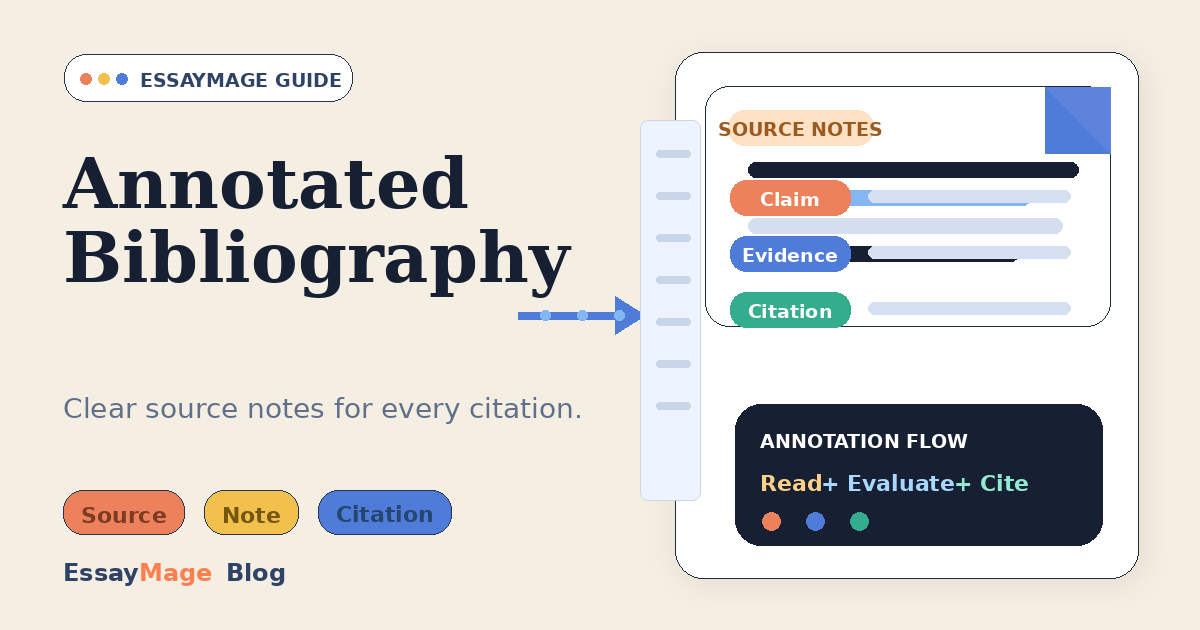
文獻註釋書目不只是參考文獻列表。每條記錄都要說明文獻的觀點、可信度以及它如何支持你的研究。本指南提供一個實用流程,幫助你把資料庫檢索結果轉化為可用研究筆記,同時兼顧引用格式、學術語氣和原創性。
提交前,你可以使用 EssayMage 的 Academic Proofreader 潤飾語言,用 Tone Refiner 調整句子語氣,並透過 Originality Scanner 檢查原創性。
為什麼這項能力重要
Academic assignments reward decisions that are visible to the reader. When your research notes, paragraph structure, and final wording are deliberate, your work feels more credible and easier to assess. The goal is not to sound complicated; the goal is to make the logic of your thinking easy to follow from the first sentence to the final line.
This topic also protects you from last-minute revision problems. Students often lose time because they collect too many sources, repeat the introduction in the conclusion, or paste paraphrases that are too close to the original. A clear method reduces those risks and gives you a repeatable process for future papers.
分步驟方法
1. Understand the purpose before you collect sources
Start with the purpose of the assignment and write one sentence that names the job this part of the paper must do. Then compare that sentence with your draft. If the draft contains extra background, unsupported claims, or language that does not move the argument forward, revise before adding more material. This small pause keeps the section focused and prevents accidental repetition.
Use evidence carefully. Introduce the source or point, explain why it matters, and connect it back to the question your paper is answering. If a sentence could appear in any essay on the topic, make it more specific by naming the concept, method, example, or consequence that belongs to your assignment.
2. Choose sources with a clear screening checklist
Start with the purpose of the assignment and write one sentence that names the job this part of the paper must do. Then compare that sentence with your draft. If the draft contains extra background, unsupported claims, or language that does not move the argument forward, revise before adding more material. This small pause keeps the section focused and prevents accidental repetition.
Use evidence carefully. Introduce the source or point, explain why it matters, and connect it back to the question your paper is answering. If a sentence could appear in any essay on the topic, make it more specific by naming the concept, method, example, or consequence that belongs to your assignment.
3. Write the summary before the evaluation
Start with the purpose of the assignment and write one sentence that names the job this part of the paper must do. Then compare that sentence with your draft. If the draft contains extra background, unsupported claims, or language that does not move the argument forward, revise before adding more material. This small pause keeps the section focused and prevents accidental repetition.
Use evidence carefully. Introduce the source or point, explain why it matters, and connect it back to the question your paper is answering. If a sentence could appear in any essay on the topic, make it more specific by naming the concept, method, example, or consequence that belongs to your assignment.
4. Evaluate credibility, relevance, and limits
Start with the purpose of the assignment and write one sentence that names the job this part of the paper must do. Then compare that sentence with your draft. If the draft contains extra background, unsupported claims, or language that does not move the argument forward, revise before adding more material. This small pause keeps the section focused and prevents accidental repetition.
Use evidence carefully. Introduce the source or point, explain why it matters, and connect it back to the question your paper is answering. If a sentence could appear in any essay on the topic, make it more specific by naming the concept, method, example, or consequence that belongs to your assignment.
5. Connect each annotation to your own argument
Start with the purpose of the assignment and write one sentence that names the job this part of the paper must do. Then compare that sentence with your draft. If the draft contains extra background, unsupported claims, or language that does not move the argument forward, revise before adding more material. This small pause keeps the section focused and prevents accidental repetition.
Use evidence carefully. Introduce the source or point, explain why it matters, and connect it back to the question your paper is answering. If a sentence could appear in any essay on the topic, make it more specific by naming the concept, method, example, or consequence that belongs to your assignment.
6. Revise for concise academic tone
Start with the purpose of the assignment and write one sentence that names the job this part of the paper must do. Then compare that sentence with your draft. If the draft contains extra background, unsupported claims, or language that does not move the argument forward, revise before adding more material. This small pause keeps the section focused and prevents accidental repetition.
Use evidence carefully. Introduce the source or point, explain why it matters, and connect it back to the question your paper is answering. If a sentence could appear in any essay on the topic, make it more specific by naming the concept, method, example, or consequence that belongs to your assignment.
7. Check citations, paraphrases, and final consistency
Start with the purpose of the assignment and write one sentence that names the job this part of the paper must do. Then compare that sentence with your draft. If the draft contains extra background, unsupported claims, or language that does not move the argument forward, revise before adding more material. This small pause keeps the section focused and prevents accidental repetition.
Use evidence carefully. Introduce the source or point, explain why it matters, and connect it back to the question your paper is answering. If a sentence could appear in any essay on the topic, make it more specific by naming the concept, method, example, or consequence that belongs to your assignment.
需要避免的常見錯誤
- Treating a required academic format as a decoration rather than part of the argument.
- Using long quotations or copied phrasing when a concise paraphrase would show stronger understanding.
- Adding a dramatic final claim that the paper has not actually proven.
- Forgetting to check whether every citation, paragraph, and transition supports the same central purpose.
- Revising only grammar while leaving structure and source use unchanged.
提交前快速清單
- Does the title match the real focus of the draft?
- Does every paragraph have a clear function?
- Are sources introduced, interpreted, and cited consistently?
- Have you removed repeated wording from the introduction and conclusion?
- Have you checked tone, grammar, and originality before submission?
提交前,你可以使用 EssayMage 的 Academic Proofreader 潤飾語言,用 Tone Refiner 調整句子語氣,並透過 Originality Scanner 檢查原創性。